What is Google Ads Data Hub
The General Data Protection Regulation (GDPR) has brought many new challenges related to the personalization and matching of online advertising. One of the key elements of the regulation that affects how online advertising works is protecting consumers from excessive use of data collected by publishers and advertisers. In particular, it concerns data such as gender, age, and other data that can be considered as data close to the user's personal sphere.Before the GDPR implementation in Europe, it was possible to transfer data between Google platforms, which at the end of the day enabled the identification of even a single user and reaching him or her with a tailored advertising message.
Trusted by:


What is Google Ads Data Hub
The introduction of the new law prevented limitless data exchange, which in turn forced Google to provide new tools for campaign management and action planning. That's the main reason behind the creation of Google Ads Data Hub.
Data Hub is the so-called data clean room, i.e. a space that allows you to safely and legally collect, aggregate, and store customer data in a manner consistent with legal requirements, primarily the GDPR.
What challenges Data Hub solves?
The basic justification for the creation of Google Data Hub was to create a tool that would allow for the analysis of marketing data and provide analyzes in line with business goals while respecting the law and maintaining compliance with the GDPR.
Examples of privacy-related safeguards at GDH include:
- No direct access to source - marketers receive data processed in such a way that the GDPR is not violated, and access to raw data is impossible.
- Built-in masking mechanisms - even if, despite the security measures, the analyst gains access to data protected by the GDPR, Google will automatically filter out these results without prior warning or asking for consent.
What is Data Clean Room
Data Clean Room is a space where companies can store all their marketing data. Within this space, you can combine data from external tools with your data obtained, for example, from sales or promotional campaigns.
The Data Clean Room allows you to ensure high privacy for users while allowing you to track and analyze advertising information. This means that companies addressing their offer to a wide group, primarily large online stores, can combine and correlate data to precisely assess the effectiveness of activities and check whether money on advertising is spent efficiently.
How Google Ads Data Hub works
Before GDPR made it necessary to protect user privacy and data, marketers had much easier access to detailed information about users. Previous Google solutions, properly used by a skilled marketer, allowed to obtain very precise data about a specific user.
The principles of Google Ads Data Hub assume that the analyst cannot access data for groups smaller than 50 people and all data is anonymized as much as possible. That makes it impossible to track a single user, yet the data is still useful in terms of business use cases.
Analytical sandbox
To fully explore the possibilities offered by the platform, the system also offers training data that allows you to explore the set of tools available in Google Ads Data Hub. This data set is free to experiment without the risk of corporate data being corrupted or modified. You can also work on it before the company collects its data to approach experiments with some knowledge.
The advantages of Google Ads Data Hub
From the perspective of marketers, the key is the ability to analyze data in a similar way as in the Attribution 360 and Audience Center 360 tools.
Segmentation
While marketers don't have direct access to individual user data, they do have the ability to further segment and analyze the results. Despite aggregation and anonymization, the data is precise enough to make the prepared analyses effective. As usual, the devil is in the details and the quality of campaigns prepared based on analyzes will depend on skillful contextualization of data.
Legal compliance
The use of Google Ads Data Hub completely allows you to run similar campaigns as with the previous tools. At the same time, marketers using this tool have a full guarantee that their activities will not cross any rules in terms of personal data protection.
Easy to connect with other tools
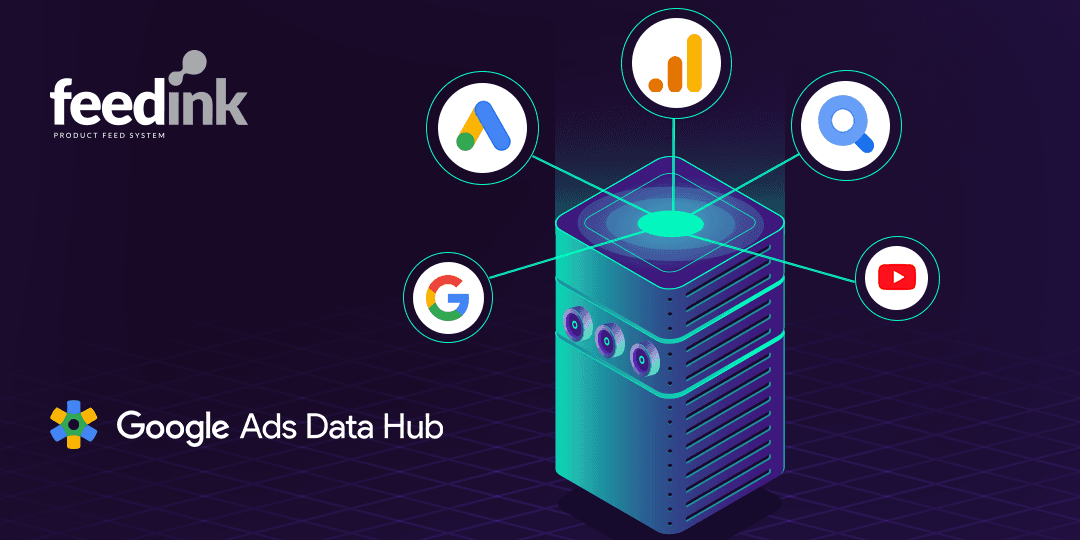
Google Ads Data Hub allows you to collect data from many different tools in one place and process it for the needs of various reports. This is convenient because previously, preparing reports required creating multiple copies of data and sharing them, which was associated with the risk of data loss or leakage outside of an organization.
Google Ads Data Hub creates a single property where data from multiple channels is aggregated and unified for analytics and optimization.
Real-time updates
In practice, Google Ads Data Hub does not store records, but connects to the services from which it collects and aggregates data. This means that if there is a change in specific parameter, it will updated in the reports without the need for manual reloading or exporting.
This can be especially important for reports that combine information from different sources. For example, if the sales status in CRM changes from "open" to "closed", this affects the ROI of the channel.
Summary
Google Ads Data Hub has two roles - on the one hand, it is a tool that protects Internet users from excessive profiling. On the other hand, it is a tool that is a natural, next step in the development of marketing analytics by organizing and facilitating access to data across multiple platforms and tools.
What is Feedink?
Feedink is a product feed management tool. It imports your store's offer, lets you improve it with rules and sends up-to-date feeds to Google Shopping, Meta, price comparison sites and marketplaces.
Would you like to learn more about how we can help your business?