How to set up an online store? Types, set up costs, running costs
Out of 38 million Polish residents, over 27.5 million are Internet users, of which 62% have made purchases online.

Trusted by:


Electronic commerce in Poland has been growing steadily for many seasons.
Every year, more boundaries are crossed and online sales are becoming more widespread. No wonder that this sales channel has been doing very well and new sellers are constantly coming.Working on developing online sales in your own store is a really rewarding job, but requires intense effort, consistency, regularity and an idea. On the one hand, online sales is seen as a business that should be profitable in a short period of time and on the other, you cannot forget that the internet is a huge space where you will have to put up a titanic struggle.
There are no two identical stores – what exactly is an online store?
Online stores are part of the wider phenomenon called e-commerce. Online purchases include the sale of products, tools and services. When it comes to payments, it should be possible to implement as many options as possible - from online payments, via BLIK, traditional transfer, as well as "on delivery".

The term e-commerce (electronic commerce) appeared in 1997. It is worth knowing, that the concept itself refers to online sales and purchases. The very first steps towards online sales were made as early as 1979, when the English inventor, innovator and entrepreneur Michael Aldrich invented something that resembled online shopping. There was no internet yet, but there was television and Aldrich used it in order to present offers from stores such as Tesco. After selecting products via a telephone line connected to the TV, the order was transferred to the store and processed.However, the first online stores were created a while later. The first period of real development for e-commerce was in the 1990s. In 1994, Amazon was founded and Pizza Hut delivered the first pizza ordered online. In 1998, the first system enabling PayPal online payments was created, and in 1999 the Polish Allegro sales platform was launched. The new millennium brought us various significant breakthroughs. Online shopping has developed with regular consistency, increasingly convincing entrepreneurs to pay attention to this sales channel.Currently, online stores are extremely powerful tools that make up the entire online environment. What does it mean? Today, it is not enough to set up the store itself, to build sales at the specific level, it is necessary to construct the entire strategy, where the store is the foundation and the other elements are online campaigns, working on the image, credibility, trust of the brand on the web. You also have to work on the content, present yourself as an expert, run social media, respond quickly to user comments, collaborate with influencers, etc. Nowadays, fast order processing is not enough today to think about conquering the network. Good market recognition will also help answer questions such as how to set up an online store or how to start selling online. However, there are many more elements that make up the entire e-commerce environment. Check what is worth knowing to know how to answer the question - how to run an online store.
Free solution or maybe a SaaS platform? - i.e. where to set up an online store
Ecommerce reality for two decades of the 21st century has evolved into a space that is very appreciated by users, a place where they can safely and quickly make any purchase. No stationary store has such a large offer as on the network, which allows you to buy socks, pasta, TV or garden tool house. The Internet is a huge price comparison site, a place where you can buy cheaply, but there are also many exclusive products. No wonder then, that there are many solutions available that online retailers can use. Today, there are a lot of possibilities thanks to which it will be possible to create an ideal e-store that will meet both your budget and your expectations.

How to start the adventure with your own online store - what solution should you choose from those available on the market:
- open source platforms - this is a free solution. What does it mean? This means that the source code can be downloaded from the platform's website and installed on the server. Simple? Not completely. For such source code to be right you need to know something about the code configuration itself. Although we have a CMS available, the administrative panel alone is not enough for an e-store to be effective. You need something more. However, open source platforms are extremely popular today. This is because they bring together entire communities that develop platform engines. And the adaptation to the expectations of the online store does not have to be expensive, even if we invite a programmer to cooperate. And what OS platforms we can choose from:
- PrestaShop - an extremely popular platform, which also offers a ready-made free template in a completely free version. It can be successfully customized to look original. The advantage of the platform is its relatively easy operation and almost infinite possibilities. A multitude of modules, responsiveness, SEO capabilities, usability, functionality and graphics are on the plus side of this platform.
- Magento - it is also a frequently chosen system for conducting online sales. Unlike PrestaShop, it is slightly more technologically advanced, which will involve higher fees, e.g. for hosting. Behind the success of this environment is the fact that nothing basically limits it when it comes to development, construction and development. It is a versatile and flexible system. Like Presta, it is tailored to the Polish market, has SEO support, has an extremely rich library of add-ons and extensions,
- WooCommerce - comes from the WordPress environment. Works great with novice sellers. The WP platform is currently the most popular solution that is used to build websites. A transparent and very intuitive administration panel, a large community, forums and websites supporting the development of WP help so that you can get to know the system fairly quickly. Just place a page on WP and upload the WooCommerce plugin to start your adventure with online sales,
- Other solutions such as Joomla, OpenCart, Drupal or osCommerce are also worth mentioning and are very popular amongst its enthusiasts. It is also worth getting to know each of these solutions. They are slightly different and the choice should be as conscious as possible. Some are easier to use, others have extremely extensive capabilities. Each of the platforms is popular and effective enough to put a fully functional and selling e-store on it.
- (Software as a Service) platforms - this solution is slightly different from open source platforms. The differences result from the fact that as a part of a paid subscription, which starts even from a few zlotys per month, we get a ready template-based store. Of course, the template can be selected and configured to be original and meet the expectations of both the seller and users. These are solutions that you can start almost immediately. The advantage of SaaS platforms is that their operation is very simple and we always have available support, we do not have to worry about hosting or server,
- individual solutions – the most important thing here is the cooperation with an interactive agency, which should be familiar with the e-commerce environment and, apart from building stores, should also be familiar with positioning and conducting effective online campaigns. In this case, the implementation takes a little longer. The agencies analyze the market, present mock-ups, functionalities, visual identification, etc. discussing everything with the customer, future seller. There are no restrictions when it comes to store options. However, this can be a costly solution. Usually used by larger stores that need exceptionally individual solutions.
Dropshipping, fulfillment or maybe your own warehouse?
After choosing the type of platform, the time will come to supplement the store with products. While it is relatively obvious that the offer of an online store must be supplemented with products sorted by category, it is less obvious how to manage these products in the context of the magazine itself. The market has developed quite a wide range of possibilities that are definitely worth looking at. Stocking the store is the most traditional form of warehouse management. However, this is not the best and the safest solution. Even if our offer is fairly standard, there is never a guarantee for what will sell in this or that store. There is a risk that the phenomenon of so-called storage chairs, with which we do not know what to do, and if we have to sell them at a loss.
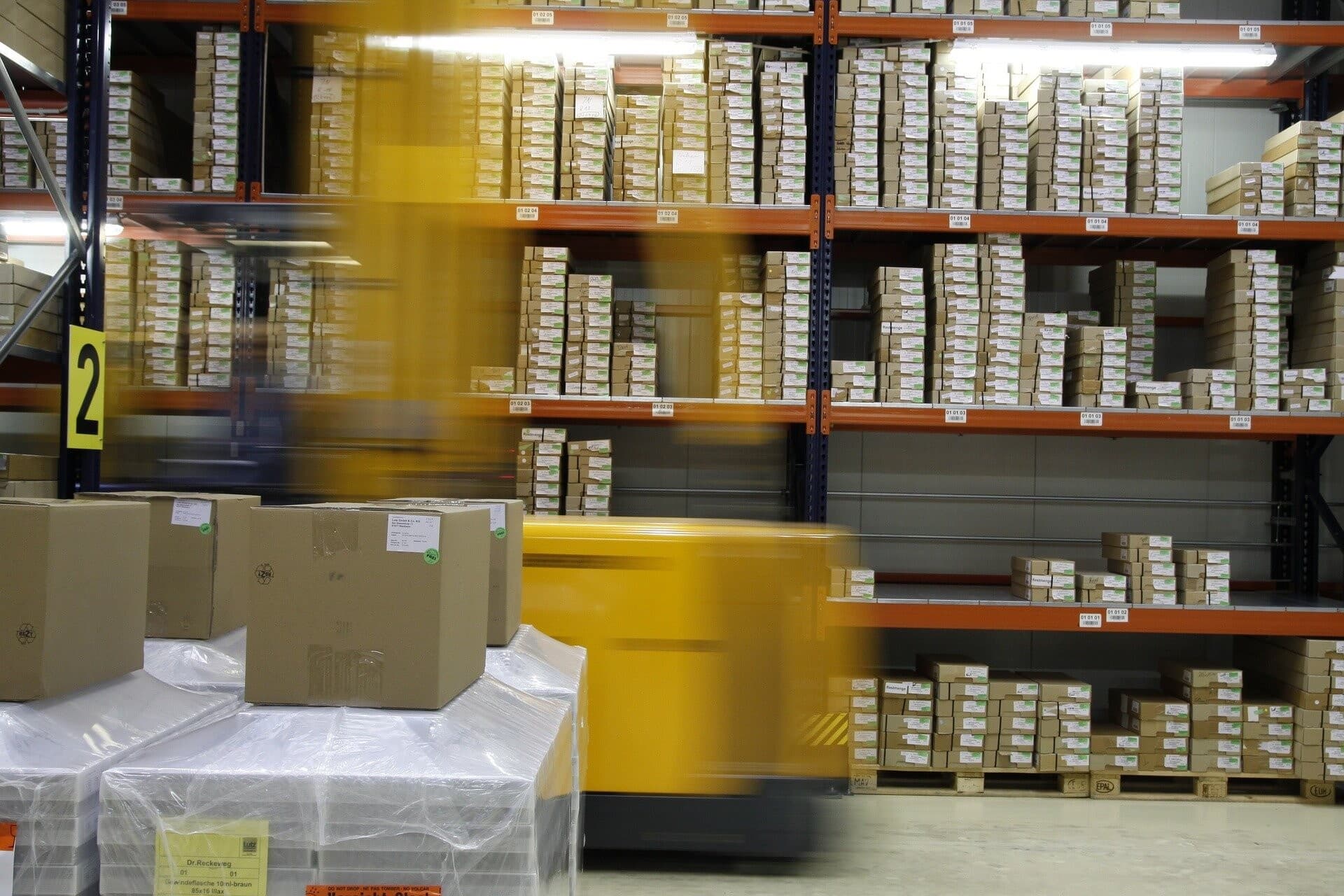
Solutions such as dropshipping and the relatively young branch of logistics for the e-commerce market - fulfillment come to the help of online sellers. What are they all about:
- store and dropshipping - it is quite a popular solution that has now permanently become part of the e-commerce landscape. It consists in the fact that as owners of an online store, we offer products distributed, e.g. in Poland, by a wholesaler or a distributor with a tailored B2B offer for online stores. They provide a product file that allows you to quickly supplement the store's offer with a wholesaler's offer. In this model we do not need to have a warehouse at all. Storage is on the supplier's side, and even more - shipping to the customer is also carried out directly from the distributor's warehouse. The online store is here a kind of bridge between the e-consumer and the wholesaler,
- fulfillment - a relatively new offer on the e-commerce market. What does it consist of? Fulfilment is logistics outsourcing. The online store transfers logistics processes to an external company. This means that the company offering this type of service stores the e-store assortment, but also deals with packaging orders and sending them to the consumer. It may as well handle returns. By using logistics outsourcing, we save a lot of time packing and sending parcels. In this way, all energy can be focused on selling and generating more profits. In this model, it is worth keeping e.g. bestsellers in an external warehouse that rotate well and bring profit.
How to promote an online store?
Since we already know how much it costs to set up an online store and how to set up and run an online store, it would be appropriate to move on to its development. What possibilities do we have in this matter?
# 1 Google Ads
All ads run on Google channels. These are text ads and those that combine graphics with text (Google Shopping). In this channel, the ad immediately appears in search results. Google Ads provide extensive optimization options, coupled with Google Analytics allow for precise analysis and subsequent optimization of ads.
# 2 Dynamic remarketing
An effective way to restore users to the online store. If the e-consumer has visited the store, browsed the product, added it to the basket or looked at the category page, you can try to get it back through this way of advertising. The right remarketing system will show similar or the same products on different pages, reminding you of your purchases.
# 3 RTB (Real Time Bidding)
This is the purchase of advertising space, which is carried out almost in real time. For this purpose, we use the auction mechanism. This means that, a single version of the advertisement in the form of, for instance, a banner on the publisher's website is sold to the one who gives the most. This way of promoting the e-store significantly affects the automatic process of campaign management, it is also relatively inexpensive and allows precise configuration of views and budget.
# 4 Facebook Ads
The value of Facebook is very important due to the fact that its users leave a lot of interesting information such as what do they do, what do they like, what are their hobbies or where they work. This data can be used by configuring extremely precisely targeted ads.
# 5 Affiliate networks
Based mainly on the CPC (cost per click) billing model, they are very helpful in promoting the e-store brand on the internet. Affiliate networks bring together a lot of ad publishers in one place. These are bloggers, influencers, owners of various portals who have space advertised on their own sites. They are happy to display the store's advertisement and if the user clicks on it they collect a fixed commission.
# 6 content marketing
An extremely broad concept behind which stands a whole range of phenomena related to content. The promotion of the e-store, which takes place on many levels, is characterized by quite diverse dynamics. On the one hand, we have campaigns that give immediate effects, on the other, we have content campaigns that you need and are definitely worth waiting for. Content, which includes product descriptions, categories, blog, sponsored articles, posts on Facebook, graphics, infographics, video materials, etc. builds a community, brand loyalty, trust, credibility, creates the image of an expert which translates into higher conversion, increased reach, high results in the search engine. Here you need consistency, regularity and a thoughtful strategy.
How to manage the online store offer?
Regardless of the decision on which online store to open, one thing is certain - the store's offer can be smaller or larger, and we can also assume in advance that it will change and expand. Even if we offer dozens of products at the beginning, in half a year we will want them to be tens of thousands. How to manage such a large database? The most perfect way is to use the product file. One document that contains all products offered in the store. How does it facilitate the management of the offer? Any changes made directly in the store require "clicking" each time on the product card from the administrative panel. Extremely engaging activity, wasting a lot of time. The file allows changes to be made from one item. After modification, all you need to do is to import the file and it's ready.The file contains all information about the product - name, price, weight, description, URLs photos, EAN codes, assignment to the category, color, meta description, literally every detail. The product feed also supports running an online campaign, facilitating the start of promotion and subsequent optimization. The file allows you to start working with ads on Google, Facebook or affiliate networks.Regardless of whether the online store is the result of traditional sales, or if you want to start the adventure with e-commerce from scratch, there are always a lot of questions at the beginning. How to set up an online store? How to manage it? How much does it cost to set up an online store? It is worth spending some time on those answers. Find partners, set rules related to logistics, choose promotion channels, take care of development. The task may not be simple, but extremely rewarding and definetely satisfying.
What is Feedink?
Feedink is a product feed management tool. It imports your store's offer, lets you improve it with rules and sends up-to-date feeds to Google Shopping, Meta, price comparison sites and marketplaces.
Would you like to learn more about how we can help your business?